Why hail damage is easy to miss
Hail rarely leaves dramatic holes in a shingle roof. More often it bruises the shingles, cracks the mat underneath, or knocks granules loose. From the street the roof may look fine, and nothing leaks right away. Over the following months, those weakened spots age faster under the Houston sun and eventually let water through. By then it can be harder to show which storm caused the damage.
That is why it pays to check after any storm that brought noticeable hail, even if the roof seems fine. This guide covers what you can safely check yourself. The surface of the roof is a job for a professional; our roof inspection page explains what a roofer looks at.
Clues you can see from the ground
Hail hits everything, so the easiest evidence is on softer materials around the house:
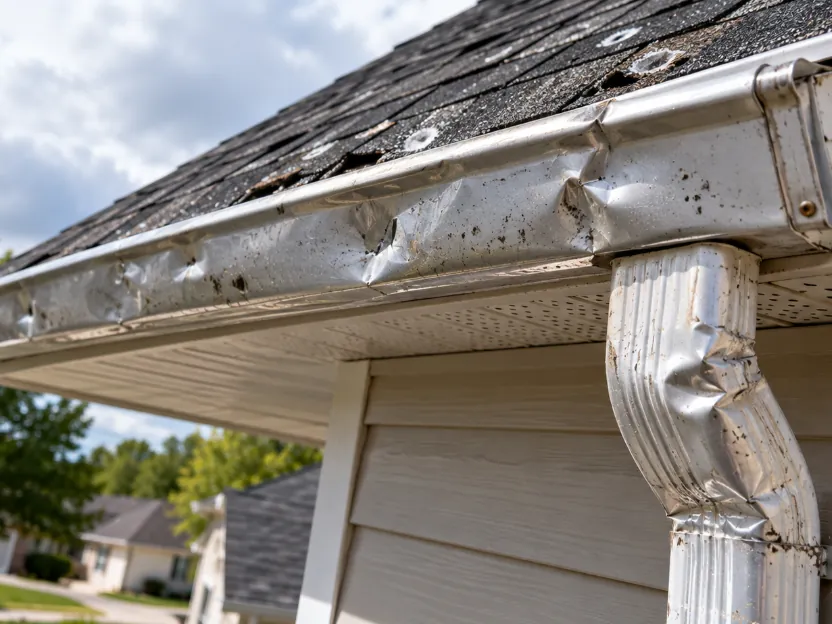
- Gutters and downspouts with fresh dents or dings.
- Roof vents, turbines and flashing with dimples you can see with binoculars.
- Window screens and frames with tears or dents.
- AC condenser fins flattened on the top or sides.
- Siding, fences, mailboxes and outdoor furniture with chips, spatter marks or dents.
- Cars parked outside during the storm with dents.
- Granules washing out of downspouts or collecting in gutters right after the storm.
Read more
Write down the date and time of the storm and take photos of each item with something for scale. If you saved hailstones, photograph them next to a coin or ruler.
It also helps to talk to neighbors. If several houses on your street have dented gutters, damaged cars or roofers already working, that is a strong sign your roof took hits too, even if you cannot see them from the ground. Local news reports and weather service storm reports that mention hail in your ZIP code are worth saving to your claim file as well. Just remember that a neighbor’s roof may be older or a different material, so their damage is a clue, not proof of yours.
What hail does to shingles
On asphalt shingles, hail damage usually shows as random dark spots where granules were knocked off, exposing the black asphalt. Pressing on a fresh hail bruise often feels soft, like a bruised apple, because the mat underneath is cracked. Damage tends to appear on the slopes that faced the storm and is usually randomly scattered, unlike wear patterns that follow the sun or the water flow.
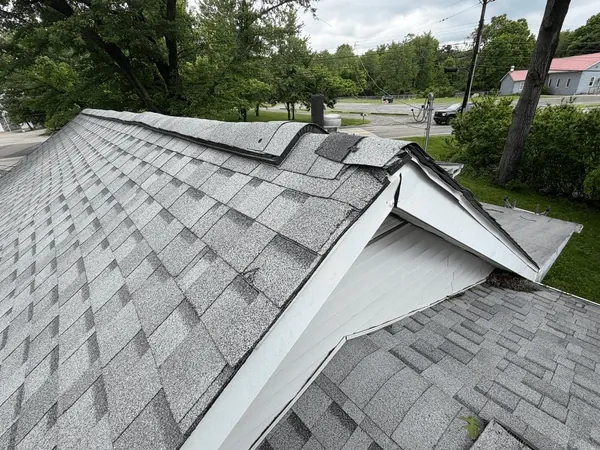
Wind often comes with hail, so roofers also check for creased, torn or missing shingles. If shingles are gone, read our page on missing shingle repair, because exposed underlayment needs attention before the next rain.
Metal, tile and flat roofs
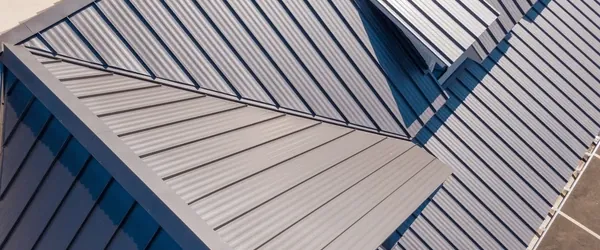
Metal roofs may dent without leaking. Insurers treat cosmetic dents differently depending on the policy, so read the wording. Clay and concrete tiles can crack or chip, sometimes in ways that only show when someone looks closely. Flat roof membranes can be punctured or bruised, particularly around seams and at older, brittle sections. In each case, the roofer is looking for damage that affects how the roof sheds water and how long it will last.
Things that look like hail but are not
Not every mark is hail. Blistering from heat, mechanical damage from foot traffic, scuffs from installation, normal granule loss on an older roof, and algae streaks can all be mistaken for hail. A good roofer will explain why a mark is or is not storm related. That honesty matters, because insurers inspect closely and a claim built on normal wear may be denied.
What to check from inside the house
The attic can tell you a lot without anyone climbing onto the roof. If you can move safely on the joists or a floored walkway, take a flashlight and look at the underside of the decking, especially on the side of the roof that faced the storm. You are looking for:
- Fresh water stains or damp spots on the wood after the storm.
- Light coming through where it did not before, around nails or penetrations.
- Wet or compressed insulation below a section of roof.
- Drips around ventspipe boots or skylights that took hits.
Read more
Inside the living space, check top-floor ceilings and the walls under the roofline for new stains. Many hail-related leaks are slow at first, so look again after the next heavy rain. Photograph anything new with the date. Together with the outside clues, this gives the roofer and any adjuster a clear picture of what the storm did. If you find active water, our guide to what to do when your roof is leaking covers the first steps.
Note the direction the storm came from. Hail damage is usually heaviest on the slopes and walls that faced the storm, and that detail helps both the roofer and the adjuster focus their inspection.
What to do next
- Photograph everything you can see from the ground and in the attic.
- Have a roofer inspect the roof and mark test areas where hits are counted.
- Decide whether the damage is likely to exceed your deductible before filing a claim.
- If you file, keep a written record of every call and visit.
Our guide to Texas roof insurance claims explains the claim process, and our storm damage roof repair page covers the repairs themselves. After a big storm, be wary of anyone who shows up unannounced; read our guide to avoiding storm chasers. To have a local contractor check your roof, our hail damage roofers in Houston line connects you with independent roofers near you.
Questions about hail damage
What size hail damages a roof?
There is no single size. Smaller hail can damage older or brittle shingles, while newer and impact-resistant roofs may withstand larger stones. Wind, hail density and the roof’s age all matter.
Can hail damage cause leaks later?
Yes. Bruised shingles can lose granules and crack over time, letting water reach the underlayment. Leaks may appear months after the storm.
Is granule loss always hail damage?
No. Some granule loss is normal wear, especially on older roofs and after a new installation. Hail typically leaves random spots of granule loss with dark, exposed asphalt.
Should I climb on the roof to check for hail damage?
It is safer not to. Check from the ground and the attic, and let a roofer inspect the roof surface. Walking on damaged shingles can also make the damage worse.
How soon should I get a roof checked after hail?
As soon as practical. Earlier inspections make it easier to link damage to a specific storm, and insurance policies have deadlines for reporting claims.
Does hail damage always need a full roof replacement?
No. Light or scattered damage may only need repairs. Widespread damage across several slopes, especially on an older roof, is more likely to lead to replacement.
Will my insurer send someone to check for hail damage?
If you file a claim, the insurer usually assigns an adjuster to inspect the roof. Having your own roofer’s inspection and photos first helps you understand what the adjuster is likely to find.