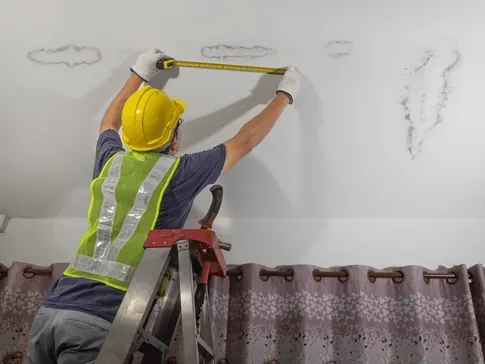
What is roof leak repair?
Roof leak repair is the process of finding where water is getting through the roof system and sealing that spot so it stays sealed through future storms. It usually happens in two stages: an immediate step to stop more water from entering, and a permanent repair to the shingles, flashing, underlayment or decking that failed.
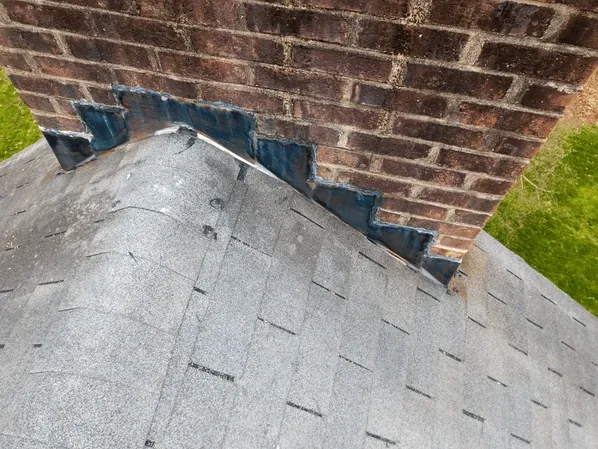
The hard part is not sealing the hole. It is finding it. Water that slips past a shingle or flashing joint can travel along the felt underlayment, the top of a rafter or the back of drywall before it finally drips. A ceiling stain in a bedroom might come from a pipe boot six feet up the slope or from a valley over a different room entirely. That is why patching the roof directly above the stain so often fails and why a proper leak repair begins with tracing, not tar. If the leak is clearly at a chimney, our guide to chimney flashing repair covers that case in detail.
How are roof leaks found and fixed?
Roofers combine several methods to locate a leak, starting with the least invasive:
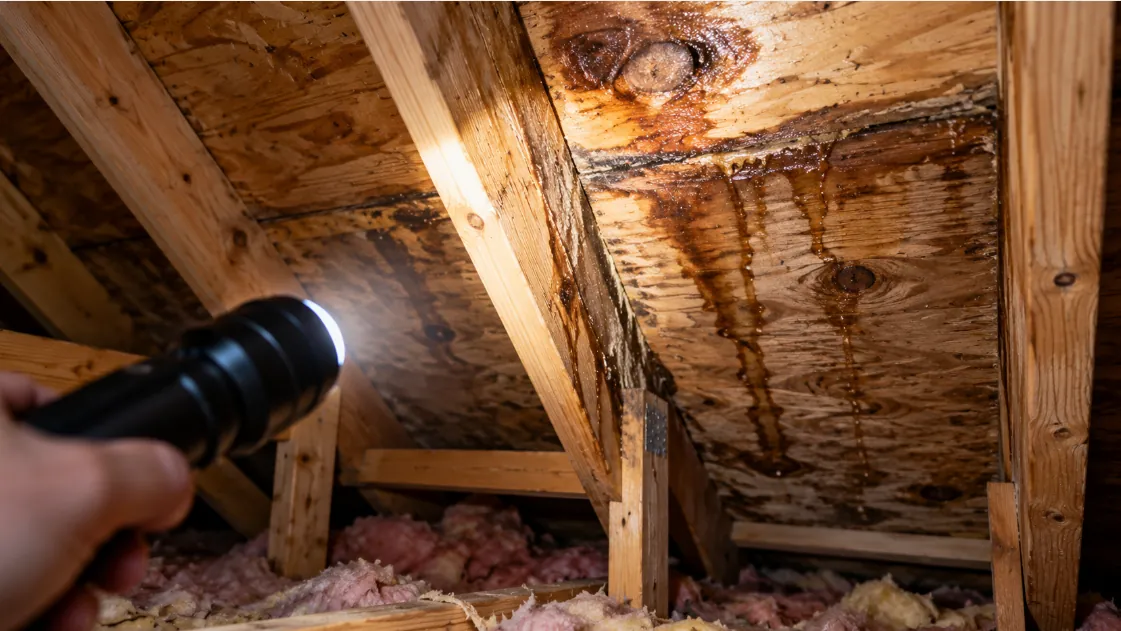
- Attic tracing With a flashlight, the roofer follows water stains, darkened wood and wet insulation from the drip point uphill to where moisture first appears on the decking.
- Exterior inspection The matching area on the roof is checked for cracked pipe boots, open flashing seams, missing or creased shingles, exposed nails and debris dams in valleys.
- Moisture meter or thermal camera These tools show where decking and insulation are wet, helping confirm the path without tearing anything open.
- Controlled water test For intermittent leaks, one person runs a hose on a single section of roof, starting low and working up, while another watches inside. When water appears, the section is identified.
Once the entry point is confirmed, the fix depends on what failed. A cracked pipe boot is replaced. Open step flashing is rebuilt. Damaged shingles are replaced and sealed. If water has soaked the decking for some time, the soft section is cut out and replaced before new underlayment and shingles go down. Finally, the roofer should recommend drying out wet insulation or ceiling materials so mold does not start.
8 warning signs of a roof leak
- Yellow or brown ceiling ringsRings with darker edges mean water has wet and dried repeatedly.
- Bubbling or peeling paintMoisture behind paint makes it blister, often near ceiling corners.
- Drips after heavy rainEven a few drops mean water is already past every layer of the roof.
- Musty attic or closet smellDamp wood and insulation give off a smell before stains appear.
- Wet or flattened insulationInsulation that is matted or dark has been absorbing water.
- Water stains on raftersDark trails on framing show the path water takes in the attic.
- Mold spots on deckingBlack or green growth on the underside of sheathing signals ongoing moisture.
- Sagging drywallA soft bulge means water is pooling above the ceiling and needs attention now.
What causes roof leaks in Houston?
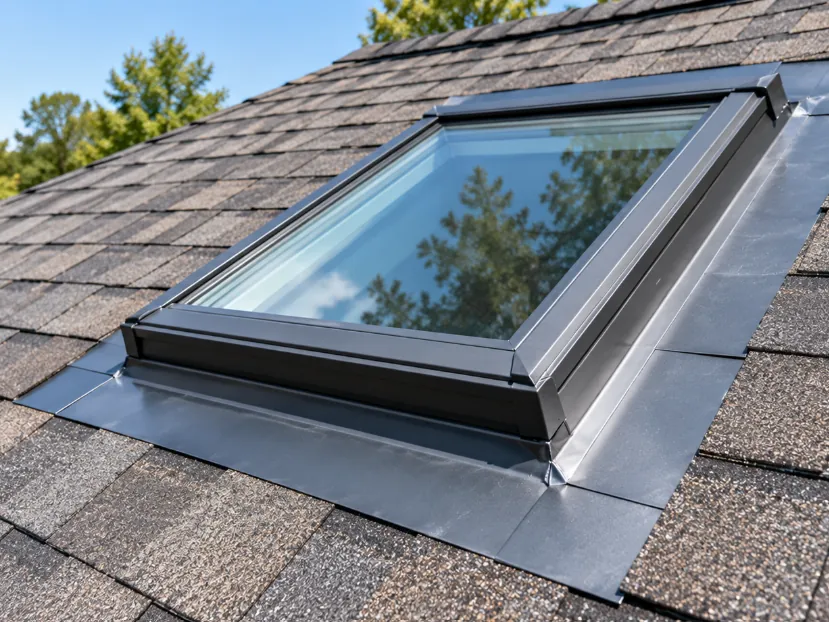
Plumbing vent boots are one of the most common culprits. Their rubber collars dry out and crack under strong sun, letting water run straight down the pipe into the attic. Flashing is next: step flashing along walls, valley metal and the seals around skylights and chimneys open up as sealant shrinks and nails loosen.
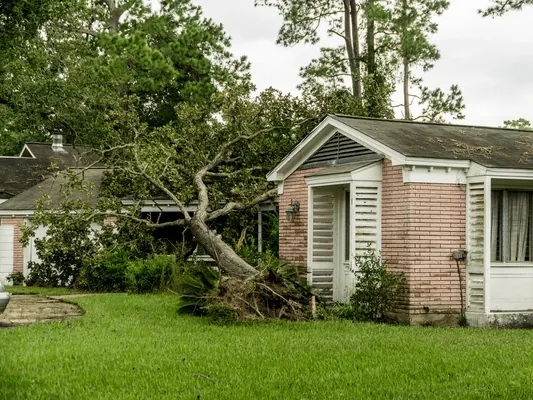
Wind-driven rain is a particular problem during Gulf storms. Water gets pushed sideways under shingle edges, through ridge vents and past flashing that sheds normal rain just fine. Missing or creased shingles from a previous storm leave the underlayment exposed, and underlayment alone does not hold out water for long in Houston sun.
Clogged valleys and gutters are a slower cause. When leaves and pine needles dam a valley, water backs up and runs under the shingles. Overflowing gutters can push water behind the fascia and into the roof edge. Finally, simple age plays a part: as shingles become brittle, cracks and nail pops multiply until leaks appear in several places at once, and the honest conversation turns to replacing the roof.
Who should you call for a leaking roof?
For a leaking roof, call a roofer, not a general handyman or a plumber, unless you are sure the water is coming from a pipe. A roofer can find where water gets through the roof, protect the house with a tarp if rain is coming, and repair the shingles, flashing or decking that failed. If you see water in the attic but no stain on the ceiling yet, that is still a roof leak call.
Not every leak starts in the same place, so tell the roofer what you have noticed:
Read more
- Leak in the attic Wet insulation or dark decking usually points to a pipe boot, a nail pop or a flashing joint above that spot.
- Water damage on the ceiling Rings and bubbling paint mean water has been reaching the drywall, often over several storms.
- Roof drain leaks On flat and low-slope roofs, a clogged or failed roof drain is a common source of leaks and ponding water. See our commercial and flat roofing page for more.
- Leaks near chimneys and skylights These are usually flashing problems, covered in our guide to Houston roof flashing repair.
A leaky roof does not fix itself, and a small leak in a humid Houston attic can lead to rot and mold within weeks. Fixing a roof leak early almost always costs less than repairing the water damage it causes later.
What can you do safely before the roofer arrives?
Protect the inside of the house first. Move furniture, electronics and rugs out of the drip path and place a bucket or bin under the leak with a towel inside to stop splashing. Photograph the stain, the drip and the attic area if you can reach it safely, because those photos help the roofer and any insurance claim.
If the ceiling is bulging with trapped water, carefully poke a small hole at the lowest point with a screwdriver while standing to the side, with a bucket below. That controlled drain prevents a larger section of drywall from collapsing. Turn off power to any light fixture near the leak if water is close to it.
Never climb onto a wet roof to place a tarp yourself, especially at night or during a storm. Wet shingles are extremely slippery, and many serious injuries happen exactly this way.
What does a roofer do on a leak call?
- Gather clues. The roofer asks when the leak appears, which storms trigger it and where it shows up inside.
- Inspect the attic. They trace the water path upward from the stain to the earliest sign of moisture.
- Inspect the roof. The matching roof area is checked for failed boots, flashing, shingles and debris.
- Temporary protection. If rain is coming and the repair cannot be finished, a tarp is secured over the area.
- Permanent repair. Failed components are replaced, wet decking is cut out if needed and the area is rebuilt in the correct lapping order.
- Confirm and document. The roofer shows you photos of the cause and the repair and may suggest a water test or follow-up check after the next heavy rain.
What affects the cost of a roof leak repair?
The price of a leak repair depends mostly on what failed and how long water has been getting in.
| Factor | How it affects price |
|---|---|
| Source of the leak | A pipe boot is a small repair; rebuilding wall or chimney flashing takes longer. |
| Time to locate it | Intermittent leaks that need water testing add labor. |
| Decking damage | Long-running leaks often require new sheathing. |
| Emergency tarping | After-hours or storm-day tarping is usually priced separately. |
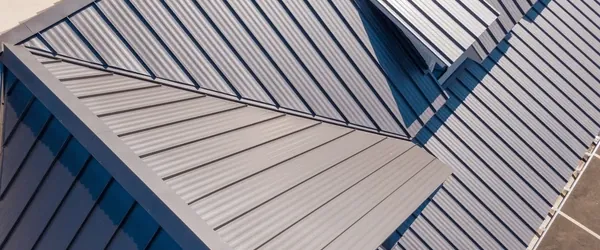
| Roof material | Tile and metal leaks require different parts and handling than shingles. |
When is a roof leak an emergency?
A leak is an emergency when water is entering the living space faster than you can catch it, when it is near electrical fixtures or outlets, when the ceiling is sagging, or when an opening in the roof is exposed with more rain on the way. In any of those cases, call right away and ask for temporary tarping.
Write down the date, time and weather each time the leak appears, including wind direction if you know it. That pattern can save a roofer a lot of searching.
If the leak followed a hail or wind event, start with our storm damage roof repair page, and for everything else Houston homeowners deal with, our main page on Houston roofing help is a good starting point.
Questions about roof leak repair
Why does my roof only leak in certain storms?
Leaks that appear only with heavy, wind-driven rain usually come from flashing, ridge vents or shingles that let water in when it is pushed sideways or uphill. Gentle rain runs off normally, so the problem hides between storms.
Can a leak be fixed from inside the attic?
Not permanently. Roofers sometimes use the attic to locate the leak and contain water temporarily, but the fix has to be made on the roof surface where water enters.
How quickly should a roof leak be repaired?
As soon as possible. Even a slow drip soaks decking and insulation and can lead to mold within days in humid weather. If the permanent repair must wait for dry weather, a tarp should go on first.
Is a leaking roof covered by insurance?
If a sudden event like wind or hail caused the leak, the resulting damage may be covered after your deductible. Leaks from wear or lack of maintenance usually are not. Document the leak with photos right away.
My ceiling stain is far from where the roof looks damaged. Is that normal?
Yes. Water often runs along rafters, the top of drywall or the underside of decking for several feet before it drips. That is why tracing the path matters more than patching the spot directly above the stain.
Could it be condensation instead of a roof leak?
Sometimes. Condensation from poor attic ventilation or uninsulated ductwork can drip like a leak, especially on hot humid days. A roofer can tell the difference by checking when the water appears and where moisture collects.
Who do I call if my roof is leaking?
Call a roofer. A roofer can trace the leak to its source, tarp the roof if more rain is coming, and repair the shingles, flashing or decking that failed. Call a plumber only if the water is clearly coming from a pipe.
Can a small roof leak wait?
It should not wait long. Even a small leak soaks insulation and decking, and in Houston humidity that can lead to rot and mold quickly. Get it checked before the next heavy rain.