What is commercial roofing?
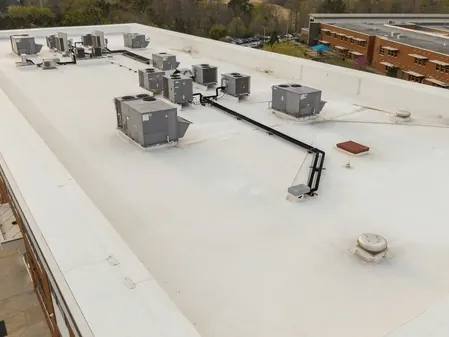
Commercial roofing covers the installation, repair, maintenance and replacement of roofs on non-residential and multifamily buildings: offices, retail centers, restaurants, warehouses, churches, schools and apartment complexes. Most of these buildings have low-slope roofs, often called flat roofs, which drain slowly toward internal drains, scuppers or gutters instead of shedding water quickly down a steep pitch.
Low-slope roofs rely on a continuous waterproof membrane rather than overlapping shingles. That membrane can be single-ply sheets such as TPO or EPDM, multi-ply systems such as modified bitumen and built-up roofing, fluid-applied coatings or metal panels. The roof also carries HVAC units, ductwork, exhaust fans and sometimes solar arrays, all of which add penetrations and foot traffic. Because commercial buildings serve tenants and businesses, roofing decisions weigh disruption, safety, warranties and long-term operating costs alongside price. Steep-slope commercial buildings exist too, and many use the systems described on our metal roof installation page.
How do commercial roofing systems and repairs work?
Each system has its own strengths and repair methods:
- TPO White, heat-welded single-ply sheets that reflect sunlight. Repairs involve cleaning and heat-welding new material over damage or open seams.
- EPDM Black rubber membrane with taped or adhered seams. Repairs use compatible primers, tapes and patches.
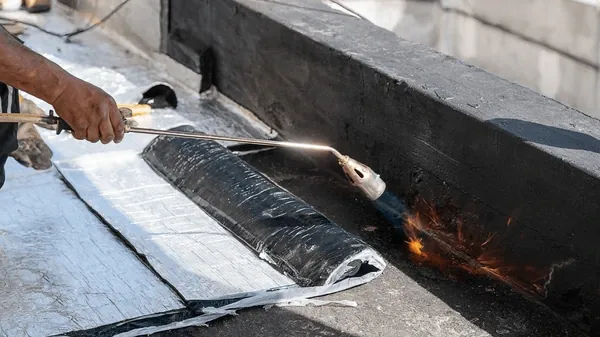
- Modified bitumen Asphalt-based rolls applied in layers by torch, adhesive or self-adhesion, often with a granulated cap sheet.
- Built-up roofing Alternating layers of bitumen and reinforcing felts, often topped with gravel.
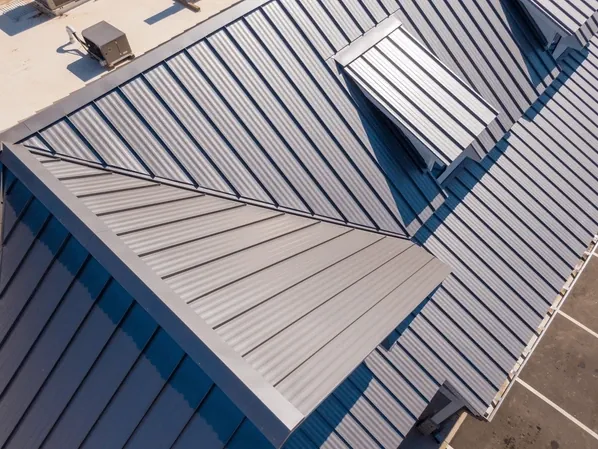
- Metal Panels on low-slope or steep-slope buildings, sometimes restored with coatings.
- Roof coatings Fluid-applied silicone, acrylic or other coatings over sound existing roofs to restore and reflect.
Commercial repairs start with a survey of the whole roof, since the visible leak may come from a distant seam or drain. Infrared or moisture surveys locate wet insulation under the membrane. Repair, restoration or replacement is then decided based on how much of the roof is still dry and sound.
8 warning signs on a commercial roof
- Ponding waterWater standing long after rain stresses membranes and seams.
- Open or lifting seamsMembrane edges separating at laps and corners.
- Blistering or bubblingTrapped moisture or air lifting the membrane.
- Cracked flashing at curbs and wallsBase and parapet flashing failing at transitions.
- Clogged drains and scuppersDebris blocking water exits.
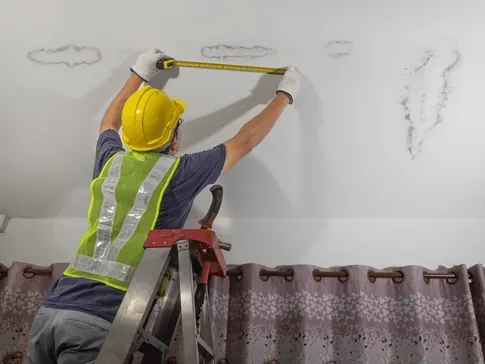
- Interior ceiling stainsStained ceiling tiles below the roof.
- Soft spots underfootWet or crushed insulation beneath the membrane.
- Rising energy billsWet insulation loses value and lets heat through.
What causes commercial roofs to fail?
Water that does not drain is the biggest stressor. Clogged drains, sagging decks and crushed insulation create ponds that stay for days, accelerating membrane aging and finding every weak seam. Rooftop equipment brings more risk: each unit, duct and pipe needs flashing, and service technicians walking to and from equipment wear and puncture the roof surface.
Houston's climate adds heat, ultraviolet exposure and storms. Membranes and coatings age under intense sun, seams are tested by temperature swings, and high winds can peel back edges if perimeter securement is weak. Tropical storms bring heavy rainfall rates that overwhelm undersized drainage. Poor original installation, such as inadequate seam welds or missing edge details, shows up within a few years. Because a single failed seam can affect a large area, prompt roof leak repair matters more on flat roofs than almost anywhere else.
Read more
Age and repeated patching are the final factor. Commercial roofs often accumulate years of mismatched repairs, such as asphalt mastic smeared over a single-ply membrane or patches of incompatible materials. Those repairs may stop a leak briefly but can prevent proper welding or bonding later and sometimes void warranties. A roofer reviewing a building with a long repair history will usually test several areas to see whether the original system can still be repaired correctly.
Parapet walls are another common source of leaks on low-slope buildings. Their tops are capped with coping metal, and their inside faces are flashed down to the roof membrane. When coping joints open or wall flashing loosens, water enters the wall and appears inside the building well away from the roof surface, which can make diagnosis slow without an experienced inspector.
What can property managers safely check?
Keep a log of interior leaks with dates, locations and weather. After storms, check ceiling tiles and walls along the building perimeter and under rooftop units. If roof access is safe and permitted, walk designated paths to check drains and scuppers for debris and look for obvious ponding or loose edges.
Gather roof records: installation date, system type, warranty documents and past repair invoices. Those details help a roofer assess warranty requirements and remaining life.
Commercial roofs have hazards such as unprotected edges, skylights that will not support weight and slick membranes. Follow your building's safety rules and avoid walking near edges or skylights.
What happens during a commercial roofing visit?
- Background and access. The roofer reviews leak history, building use and safe roof access.
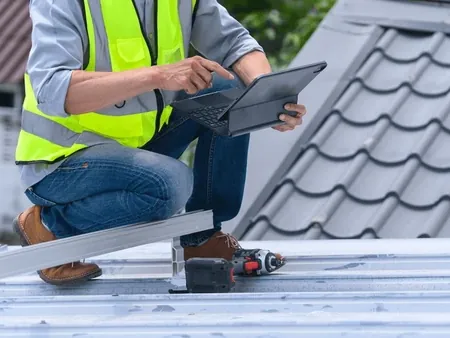
- Full roof survey. Membrane, seams, flashing, drains and equipment curbs are checked.
- Moisture assessment. Infrared or core samples may identify wet insulation.
- Findings and options. The roofer explains the findings, repair options and next steps.
- Scheduling around operations. Work is planned to limit disruption to tenants.
- Work and closeout. Repairs or installation are completed and documented for warranty records.
What does a commercial roof maintenance plan include?
A maintenance plan turns roof care into a schedule instead of a reaction to leaks. Most plans include inspections twice a year and after major storms, cleaning of drains, scuppers and gutters, checks of every seam and flashing detail, and small repairs as they are found. Inspection reports with photos build a record of the roof's condition over time.
For property owners, that record has several uses. Many manufacturer warranties require documented maintenance, and the record helps show that a later problem came from a defect or storm rather than neglect. It also supports budgeting: knowing a roof has several good years left, or that replacement is approaching, lets owners plan capital expenses instead of reacting to emergencies.
Plans also cover the trades that use the roof. HVAC technicians, electricians and telecom installers often walk across membranes carrying tools and parts, and dropped screws or careless foot traffic can puncture single-ply roofs. Walkway pads to equipment, clear rules for rooftop work and post-service inspections reduce that risk. Buildings in busy areas such as the Memorial corridor, with retail and office properties under mature trees, also need regular debris removal so drains stay clear.
What affects the cost of commercial roofing?
Commercial roofing budgets depend on size, system and how much of the existing roof can stay.
| Factor | How it affects price |
|---|---|
| Roof area | Large roofs cost more overall but less per square foot. |
| System type | TPO, EPDM, modified bitumen, built-up and metal differ in cost. |
| Wet insulation | Replacing saturated insulation adds significant scope. |
| Rooftop equipment | Curbs, units and penetrations require detailed flashing. |
| Tear-off or recover | Recovering over a sound roof avoids some removal costs. |
| Warranty level | Longer manufacturer warranties require specific systems and inspections. |
When is a commercial roof problem an emergency?
It is an emergency when water is entering occupied spaces, threatening electrical equipment, inventory or IT rooms, or when wind has peeled back a section of membrane. Deep ponding can also add heavy loads to the structure. Emergency response usually focuses on temporary sealing and drainage before permanent repairs.
Ask HVAC and other rooftop contractors to use walkway pads and report any damage they cause. Trades traffic is a major source of punctures on commercial roofs.
A twice-yearly roof inspection is the foundation of any maintenance plan. To reach a commercial roofer, call the number on this page or start from our homepage for local roofing service across Houston.
Questions about commercial roofing
What is the most common commercial roof type in Houston?
Single-ply membranes such as TPO are widely used on low-slope buildings, along with modified bitumen, built-up roofs, EPDM and metal. The right choice depends on the building, budget and how the roof is used.
Can a commercial roof be restored instead of replaced?
Often, yes. If the existing membrane and insulation are mostly dry and sound, repairs plus a fluid-applied coating can extend its life. Moisture surveys help determine whether restoration is viable.
How often should a commercial roof be inspected?
A common practice is twice a year, typically in spring and fall, plus after major storms. Regular inspections catch open seams and clogged drains before they cause leaks.
Can roof work be done while the building is occupied?
Usually. Commercial roofers plan staging, noise and safety around operations, and many projects are scheduled in phases to keep the building open.
What causes ponding water on a flat roof?
Ponding usually comes from clogged or poorly placed drains, settled or crushed insulation, or structural deflection. Water that stands for long periods stresses membranes and seams.
Does a commercial roof need a maintenance plan?
Most manufacturers expect periodic maintenance to keep warranties in good standing. A maintenance plan typically includes inspections, drain cleaning, seam checks and minor repairs.