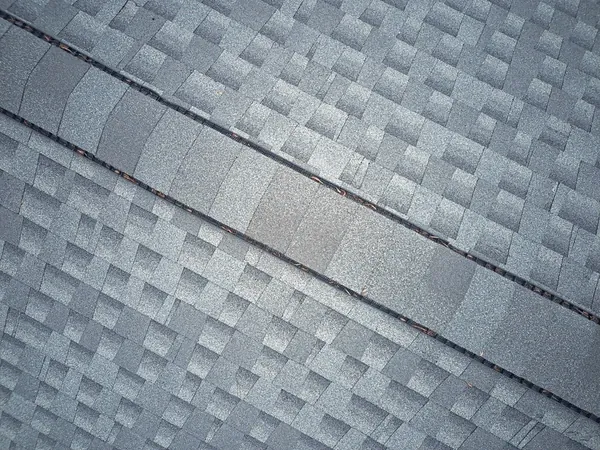
What is ridge cap repair?
Ridge cap repair replaces or re-secures the shingles that cover the peak of the roof and the hips that run down from it. Those caps seal the seam where two roof planes meet. On many roofs, they also cover a ridge vent, the continuous slot along the peak that lets hot, humid attic air escape.
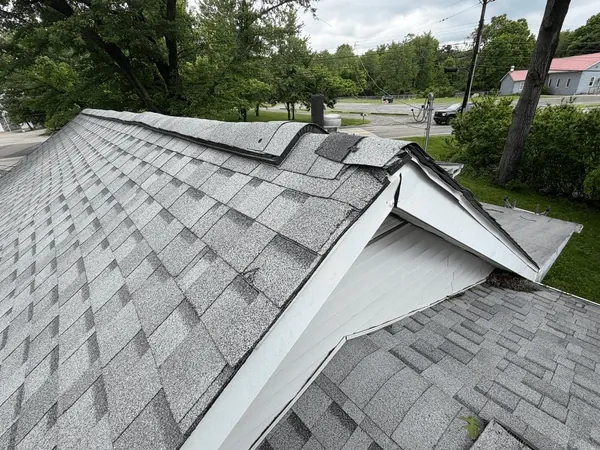
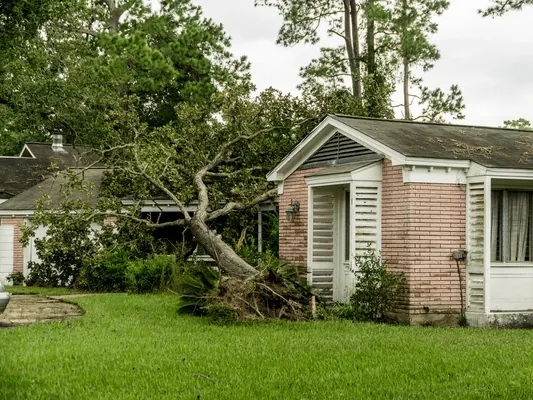
Because caps are bent over the ridge and face the full force of wind from every direction, they wear differently from the rest of the roof. They crack along the fold as shingles age, their nails are exposed to more uplift, and their sealant bonds are tested by every gust. When caps lift or blow off, the ridge vent or the gap at the peak is left open, and water can pour straight into the attic during heavy rain. Repairing caps restores the seal along that line while keeping ventilation working. When caps go missing along with field shingles after a storm, our storm damage roof repair page explains how to handle the whole picture.
How are ridge caps repaired or replaced?
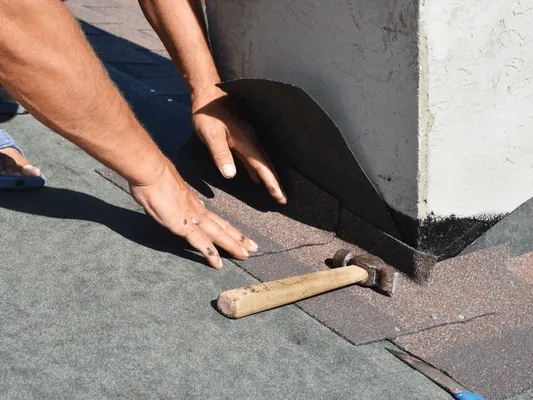
The roofer first checks the full length of the ridge and every hip, not only the obvious gap. Caps are removed in the damaged section by breaking their seal and pulling the nails, working carefully so caps on either side are not cracked.
Next, the area underneath is checked. If there is a ridge vent, it is inspected for damage, crushing or the wrong design. Debris is cleared from the vent opening, and the shingles and underlayment at the top of each slope are checked for water damage.
New caps are then installed, starting at the end opposite the prevailing wind so each cap overlaps the next in the right direction. Each cap is nailed with nails long enough to reach solidly into the decking or ridge vent, as the product instructions require, and the exposed nails at the final cap are sealed. Where caps were cut from standard shingles, a roofer may recommend a purpose-made ridge cap product, which is thicker and pre-shaped to handle the bend with less cracking. If the ventilation itself is inadequate, they may suggest upgrading to a baffled ridge vent that resists wind-driven rain.
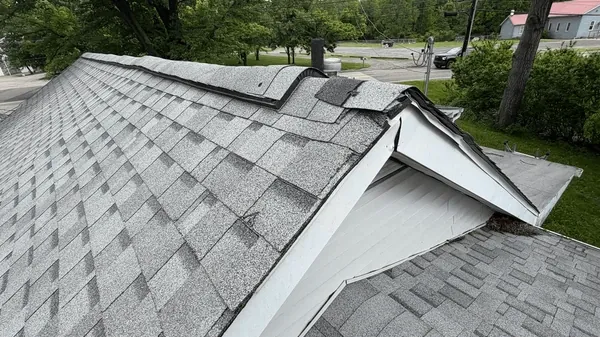
8 signs your ridge caps need attention
- Cracks along the foldSplits along the center of the cap where it bends over the peak.
- Lifted cap edgesCaps that flutter in wind have lost their seal.
- Gaps along the ridge lineA missing cap leaves the vent or peak open.
- Exposed nail headsVisible nails on caps rust and leak over time.
- Cap pieces in the yardThick, bent shingle pieces usually come from the ridge or hips.
- Attic leaks near the peakStains along the top of the rafters point to the ridge.
- Uneven or wavy ridgeSagging caps can signal damaged vents or decking beneath.
- Heavy granule loss on capsCaps often weather faster than the field shingles.
What damages ridge caps?
Wind is the biggest factor. Pressure across a roof is greatest at the peak, edges and corners, so caps experience more uplift than shingles in the middle of a slope. Once a cap's seal breaks, every gust works the nails loose. Houston's spring storms and tropical systems apply that force repeatedly.
Heat and bending are the second factor. Caps are folded over a sharp angle, so as asphalt ages in sun and attic heat, the fold becomes the weakest point and cracks open. Caps cut from standard three-tab shingles are particularly vulnerable. Installation errors add to the problem: nails that are too short to reach through a ridge vent into wood, caps installed facing into the wind, or the wrong vent product for the roof. Finally, hail can crack caps and bruise them more visibly than field shingles because of their raised position. Because caps are effectively specialty shingles, our page on missing shingle repair covers related causes on the slopes.
Ridge vent repair and ridge vent installation
On many Houston roofs, the ridge cap covers a ridge vent, so a ridge repair is often a vent repair too. A ridge vent is a continuous slot along the peak, covered by a vent product and cap shingles, that lets hot, humid attic air escape.
- Ridge vent repair Crushed, cracked or wind-damaged vents are replaced, and caps are re-nailed with fasteners long enough to reach solid wood.
- Ridge vent installation Roofs without enough exhaust ventilation can have a ridge vent added. The roofer cuts the slot along the ridge, installs the vent and caps it with new ridge shingles.
- Roof ridge repair Sagging or leaking ridge lines may involve damaged decking or ridge board at the peak, which is repaired before new caps go on.
A ridge vent only works with enough intake air at the soffits, so a roofer should check both. Blocked soffit vents are covered in our fascia and soffit repair guide.
What can you safely check?
Stand back from the house far enough to see the full ridge line and each hip. With binoculars, look for gaps, lifted edges, cracks along the center of the caps and a wavy line. After windy weather, check the yard for thick, bent pieces of shingle.
In the attic, look at the very top along the ridge board for water staining, daylight beyond what a ridge vent normally shows, and damp insulation directly below. A healthy ridge vent shows a narrow, even slot; stains around it point to a problem.
The ridge is the highest point on the roof, and falls from there are especially dangerous. Do not straddle or walk the ridge yourself, even to check a single cap.
What happens during a ridge cap repair visit?
- Inspect ridge and hips. The full length of every cap line is checked and photographed.
- Check the attic. The roofer looks for water entry and ventilation issues at the peak.
- Remove damaged caps. Failed caps and nails are removed without cracking neighbors.
- Inspect or upgrade vent. Ridge vents are cleared, repaired or replaced as needed.
- Install new caps. Caps are laid with the correct overlap direction and proper nails.
- Seal and document. Final nail heads are sealed and you receive before and after photos.
How do ridge caps affect attic ventilation?
On many Houston homes, the ridge is where the attic breathes out. A ridge vent runs along the peak under the caps, letting hot, humid air escape while cooler air enters through soffit vents at the eaves. When that airflow works, shingles run cooler and the attic stays drier, which matters a great deal in a climate with long, hot summers and high humidity.
Damaged or poorly installed caps can block or expose that vent. Caps nailed too tightly can crush the vent, and the wrong vent product can let wind-driven rain enter. If the attic also has gable vents or powered fans, they may short-circuit the airflow so the ridge vent does little. During ridge repairs, ask the roofer to assess the whole ventilation system, not only the caps, because correcting airflow can extend the life of the entire roof.
What affects the cost of ridge cap repair?
Ridge cap jobs vary mostly with length and with whether ventilation is part of the repair.
| Factor | How it affects price |
|---|---|
| Length of ridge and hips | A short section is quick; every hip and ridge takes longer. |
| Cap product | Purpose-made caps cost more than cut shingles but last better. |
| Ridge vent work | Repairing or installing a vent adds materials and labor. |
| Roof pitch and height | Steep, tall roofs need more safety setup at the peak. |
| Hidden damage | Water-damaged decking at the ridge expands the scope. |
When is ridge cap damage urgent?
Missing caps over an open ridge vent are urgent when rain is forecast, because water can fall directly into the attic. It is also urgent if water is already appearing in the attic near the peak or on ceilings below. A roofer can cover the opening temporarily until permanent caps are installed.
Ask your roofer whether your attic has enough intake ventilation at the soffits. A ridge vent only works well when air can enter low and exit high.
To find the right roofer for ridge work or anything else, our homepage is the quickest way to reach the best roofing contractors near you in Houston.
Questions about ridge cap repair
What is the difference between ridge caps and regular shingles?
Ridge caps are designed to bend over the peak of the roof. Many are thicker, pre-bent products made for the job, while others are cut from standard shingles. Purpose-made caps usually resist cracking better.
Can a ridge vent leak?
Yes. Ridge vents can let in wind-driven rain if they are the wrong product for the roof, poorly installed, damaged, or if the caps over them have loosened. Baffled ridge vents are designed to reduce that risk.
Why are my ridge caps cracking along the fold?
Shingles become less flexible as they age in heat and sun. Caps cut from standard shingles and bent over a sharp peak are especially prone to cracking along that fold.
Is ridge cap damage covered by insurance?
Caps blown off in a specific windstorm may be covered after your deductible. Cracking from age and weathering is generally treated as wear.
How long does ridge cap repair take?
Replacing a short section of caps often takes a few hours. Replacing caps along the full ridge and all hips, or adding a ridge vent, may take most of a day.
Do hip caps need the same repair?
Yes. Hip caps cover the sloped edges where two roof planes meet and face the same wind and bending stress as ridge caps, so they are inspected and repaired the same way.
Can a ridge vent be added to an existing roof?
Usually, yes. The roofer cuts a slot along the ridge, installs a ridge vent and covers it with new cap shingles. It works best when there is enough intake ventilation at the soffits.