What is tile roof replacement?
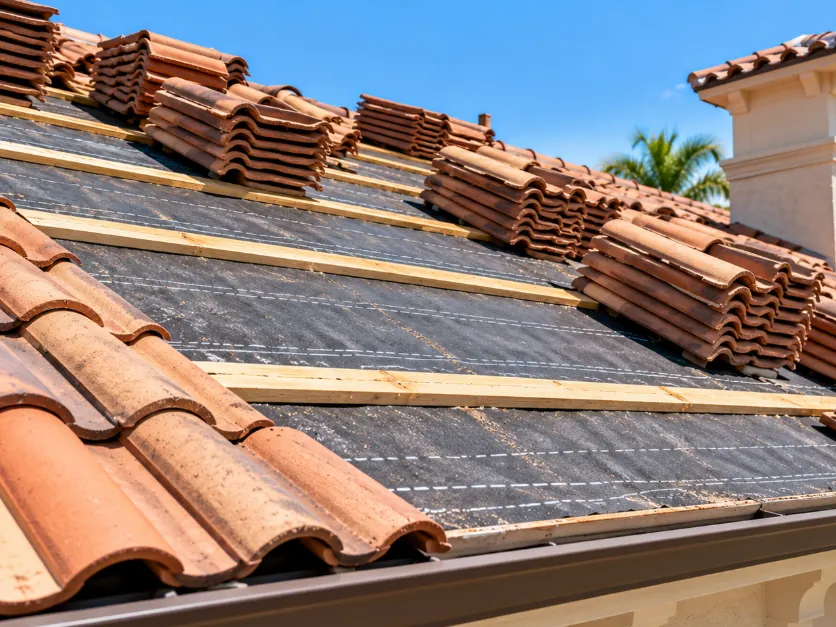
Tile roof replacement renews a clay or concrete tile roof, either by re-laying existing tiles over new underlayment and flashing or by replacing the tiles themselves. It is a specialty job because tile roofs work differently from shingle roofs. The tiles form a heavy, durable outer shell that sheds most rain and protects against sun, while a separate underlayment beneath acts as the true waterproof barrier.
Many clay and concrete tiles last far longer than the underlayment installed under them. As that underlayment ages, it can dry out, crack or tear, and leaks start even though the tiles look fine from the street. In that case, the tiles can often be carefully removed and stacked, the underlayment and flashing replaced, and the sound tiles re-laid with replacements for broken pieces. Full tile replacement is usually reserved for roofs with widespread cracked, porous or discontinued tiles, or when a homeowner wants a different look. If you are weighing tile against other options, our roof replacement page compares the full range of materials.
How does tile roof replacement work?
A tile project begins with a careful inspection, often from ladders, the attic or drone photos to limit foot traffic. The roofer assesses tile condition, underlayment age, flashing and the structure supporting the roof. Then the work proceeds in stages:
- Tile removal and staging Tiles are removed by hand, sorted, and stacked on the roof or ground for reuse. Broken and weak tiles are set aside.
- Underlayment removal The old underlayment, battens if present and failed flashing are stripped away.
- Decking repair Rotten or damaged sheathing is replaced, and fastening is checked.
- New underlayment A high-temperature, long-life underlayment suited to tile is installed, often with self-adhering membrane in valleys and at penetrations.
- Flashing and battens New valley, wall, chimney and penetration flashing is installed, along with battens if the system requires them.
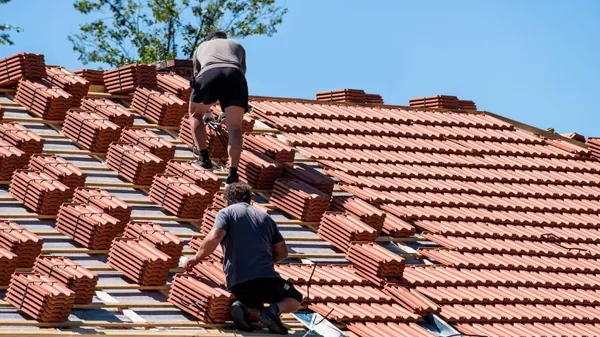
- Re-laying tiles Tiles are installed with appropriate fasteners or adhesives, broken tiles are replaced with matches and ridge and hip tiles are set and sealed.
Because tiles overlap and interlock in specific ways, each profile, from barrel clay tile to flat concrete tile, has its own installation details.
How is a tile roof repaired?
Not every tile roof problem needs a new roof. Tile roof repair fixes a specific problem, such as a few cracked tiles or a leak at a valley, while leaving the rest of the roof in place. It is often the right call when the underlayment beneath the damaged area is still sound.
- Broken tile replacement Cracked clay or concrete tiles are carefully lifted out and replaced with matching tiles. Keeping spare tiles from your roof makes this much easier.
- Concrete tile roof repair Concrete tiles can weather and absorb water over time. Damaged pieces are replaced and any exposed underlayment is checked.
- Slipped tile repair Tiles that have slid out of line are reset and re-fastened so the shell closes again.
- Leak repair under tile When water gets past the tiles, the roofer lifts tiles in that area, repairs the underlayment and flashing, then re-lays the tiles.
Repair stops making sense when the underlayment has failed across large areas or many tiles are cracked. Then the tiles are lifted, the underlayment is renewed and sound tiles are re-laid, as described below. For roofs with discontinued tiles, ask the roofer how they will source replacement roofing tiles before work begins. A tile roof inspection from ladders, the attic or a drone helps decide between repair and replacement without extra foot traffic.
8 signs your tile roof needs work
- Cracked or broken tilesImpact or foot traffic exposes the underlayment.
- Slipped tilesTiles sliding out of line leave gaps in the shell.
- Leaks with intact tilesA classic sign of aging underlayment.
- Stains in the atticDarkened decking below tile shows water getting through.
- Visible underlaymentDark felt or membrane showing between tiles.
- Loose ridge or hip tilesMortar or fasteners at the peak failing.
- Debris in valleysBlocked valleys back water up under tile edges.
- Porous or flaking concrete tileOlder concrete tile can weather and absorb water.
What causes tile roofs to fail?
Underlayment aging is the most common cause. Even with tiles shading it, underlayment experiences high temperatures under a dark tile roof during Houston summers, and older felt products dry out and crack over time. Installation choices matter: thin underlayment, poor laps and reused flashing shorten its life.
Physical damage is the second cause. Hail, falling limbs and foot traffic from other trades, such as satellite installers, solar crews and painters, crack tiles. A single cracked tile directs water straight onto the underlayment, accelerating wear in that spot. Debris trapped in valleys and behind chimneys keeps areas wet. Finally, fasteners and mortar at ridges and hips loosen with heat and movement, letting caps shift. Many tile owners considering alternatives also look at metal roof installation, which shares tile's long life with less weight.
Ridge and hip tiles are a frequent weak spot. On many tile roofs, these caps were set in mortar, which cracks over time as the roof moves with heat. Modern installations often use mechanical fasteners and specialized ridge systems that allow ventilation and movement without relying on mortar alone. Penetrations such as plumbing vents and attic fans also need tile-specific flashing, since flat pipe boots designed for shingles do not fit the profile of curved or interlocking tiles.
What can you check from the ground?
With binoculars, scan the roof for cracked, slipped or missing tiles and for dark underlayment showing between them. Look at ridges and hips for loose caps or missing mortar. Check valleys for leaves and needles. After storms, check the ground for tile pieces.
In the attic, use a flashlight to look for water staining on decking and rafters, especially in valleys and around penetrations. Note the age of the roof and the last time the underlayment was replaced if you have the records.
Do not walk on a tile roof to inspect it. Tiles crack underfoot and can slide, making falls more likely and turning a small repair into a larger one.
What happens during a tile roof project?
- Low-impact inspection. Tiles, underlayment, flashing and structure are assessed with minimal foot traffic.
- Reuse plan. The roofer estimates how many tiles can be reused and sources replacements.
- Remove and stage tiles. Tiles are lifted and stored safely during the work.
- Renew underlayment and decking. Old layers come off, decking is repaired and new underlayment goes on.
- New flashing. Valleys, walls, chimneys and penetrations are reflashed.
- Re-lay and finish. Tiles go back on, broken pieces are replaced and ridges are reset.
How does Houston's climate affect tile roofs?
Tile handles heat well. Clay and concrete have thermal mass and, with the right installation, allow air to move beneath the tiles, which can reduce heat transfer into the attic. That makes tile a natural fit for the Mediterranean and Spanish-style homes found in parts of Houston.
The challenges are storms and moisture. Wind can lift tiles that are not fastened to current standards, and large hail and falling limbs crack them. Underlayment beneath a tile roof lives in a hot, humid space, so older felt products deteriorate even though the tiles above look fine. Valleys collect leaves and needles from nearby trees, slowing drainage.
Because tile is heavy, switching from shingles to tile requires confirming the structure can carry the load, and switching from tile to a lighter material may change the home's appearance considerably. Many owners of tile-roofed homes in areas like Memorial choose to keep the tile they love and renew the underlayment, which preserves the look while restoring the roof's waterproofing.
What affects the cost of tile roof replacement?
Tile work is labor-intensive. These factors shape the estimate most.
| Factor | How it affects price |
|---|---|
| Reuse versus new tile | Re-laying existing tile usually costs less than all-new tile. |
| Tile profile and material | Clay barrel tile and specialty profiles cost more than flat concrete. |
| Replacement tile availability | Discontinued tiles may require salvaged or custom matches. |
| Underlayment system | Premium high-temperature underlayments cost more but last longer. |
| Roof complexity | Valleys, hips and penetrations require extra cutting and flashing. |
When is a tile roof problem urgent?
It is urgent when tiles have broken or slid away over an area large enough to expose underlayment, when water is entering the house, or when a fallen limb has cracked a group of tiles. Temporary covers protect the exposed area until replacement tiles and materials are in hand.
Keep a small stock of spare tiles from your roof in the garage. Matching tiles can be hard to find later, and spares make small repairs fast.
Tile roofs are a specialty within Houston's roofing market, and our homepage connects owners with providers for Houston roof repair and replacement of every kind.
Questions about tile roof replacement
Can my existing tiles be reused?
Often, yes. Many clay and concrete tiles are durable enough to be lifted, stored and re-laid over new underlayment. Broken tiles are replaced with matching or salvaged tiles where available.
Why does my tile roof leak if the tiles look fine?
Tiles shed most water, but the underlayment beneath is the waterproof layer. When underlayment ages, tears or was poorly installed, water that gets under tiles reaches the decking.
Is tile too heavy for my house?
Tile is much heavier than asphalt shingles. Homes designed for tile can carry it, but switching from shingles to tile may require a structural evaluation.
Can someone walk on a tile roof?
Experienced tile roofers know how to place their weight to reduce breakage, but foot traffic always risks cracking tiles. Limit who walks on the roof, including other trades.
Does hail break roof tiles?
Large hail and falling limbs can crack clay and concrete tiles. Cracked tiles should be replaced promptly so the underlayment is not exposed to sun and water.
How is a tile roof different from a shingle roof to maintain?
Tile needs fewer surface repairs but careful attention to flashing, underlayment and broken tiles. Valleys and areas around penetrations deserve regular checks.
Can a tile roof be repaired instead of replaced?
Often, yes. Cracked or slipped tiles and small leaks can usually be repaired if the underlayment in that area is still sound. Replacement makes more sense when the underlayment has failed across large areas.
Is concrete tile roof repair different from clay tile repair?
The process is similar, but concrete tiles are heavier and can weather and absorb water over time, while clay tiles are more prone to cracking from impact. Matching the profile and color matters for both.