What a Houston roof has to handle
Before comparing materials, it helps to list what the roof is up against here. Long, hot summers with strong sun. High humidity and frequent heavy rain. Spring hail. Wind from thunderstorms and tropical systems. Heavy tree cover in many neighborhoods. And, for most people, a budget and sometimes a homeowners association with rules about what roofs can look like.
No material wins on every count. The best choice is the one that fits your house, your plans and your tolerance for upfront cost versus long-term maintenance. If you are also budgeting, our guide to roof replacement cost factors explains how material choice affects the price.
Architectural asphalt shingles
Dimensional, or architectural, shingles are the standard on Houston homes. They are thicker than older three-tab shingles, have better wind ratings and a more textured look. They are the easiest roof to repair, nearly every roofer installs them, and replacement shingles are widely available.
The trade-off is heat. Asphalt shingles age faster under Houston sun, especially with poor attic ventilation, and standard shingles can be bruised by hail. Algae-resistant versions help with dark streaks on shaded slopes. For many homeowners, they remain the best value, provided they are installed with good underlayment, proper nailing and balanced ventilation.
Impact-resistant shingles
Impact-resistant shingles are tested under UL 2218, and the highest rating is Class 4. They use tougher mats or rubberized asphalt to resist cracking when hit by hail. They cost more than standard shingles and look similar from the street. Some insurers in Texas offer premium discounts for roofs with qualifying impact-resistant materials, which can offset part of the extra cost over time; ask your agent before you choose. They are not hail-proof, but they tend to come through moderate storms with less damage.
Standing seam and other metal roofs
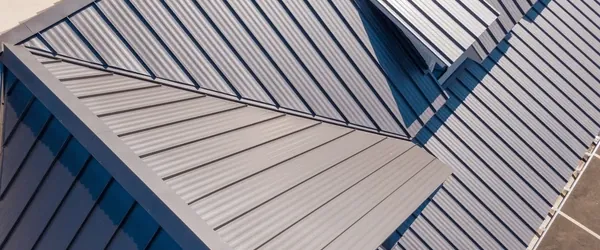
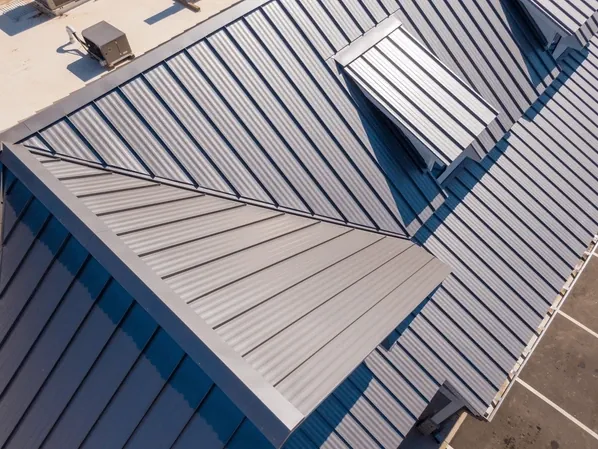
Metal is popular in Houston for good reasons. It reflects more sunlight, especially in light colors or with reflective coatings, which can help keep the attic cooler. It sheds rain quickly, resists wind when installed correctly, and generally lasts longer than shingles. Standing seam systems hide their fasteners inside raised seams, which avoids the many exposed screws that can loosen on cheaper exposed-fastener panels.
The costs are higher upfront, and installation quality matters a great deal: panel attachment, seam work, trim and flashing details all decide how the roof performs. Large hail can dent some metal roofs even when they keep out water. Our metal roof installation page explains the installation steps and questions to ask.
Clay and concrete tile
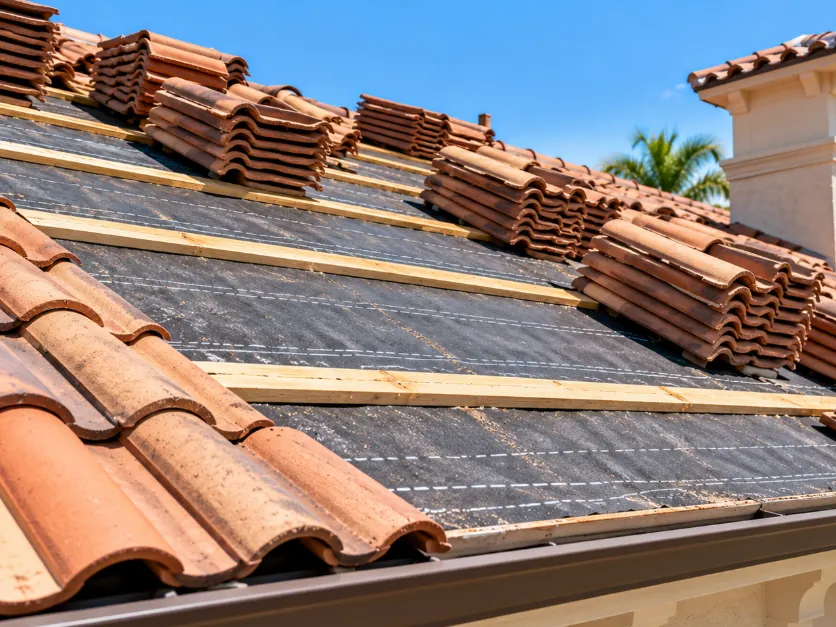
Tile suits Mediterranean and Spanish-style homes common in some Houston neighborhoods. Clay and concrete tiles are very durable, resist fire and heat, and can last a long time. The weak point is usually the underlayment below the tiles, which wears out sooner and is replaced by lifting and re-laying the tiles. Tile is heavy, so the framing must be able to carry it, and tiles can crack when walked on or hit by large hail. See our tile roof replacement page for more.
Flat and low-slope roofs
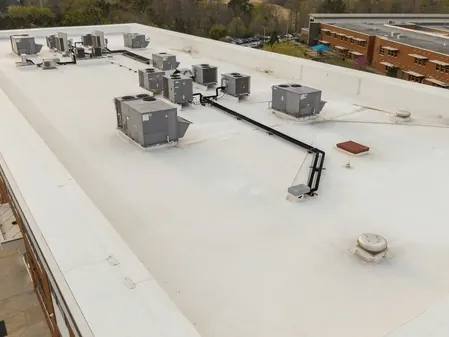
Many Houston homes have a low-slope porch, garage or addition, and most commercial buildings are flat. Those areas need a membrane, not shingles. TPO and PVC single-ply membranes are common and often white to reflect heat. Modified bitumen and EPDM are also used. Drainage is the key: flat roofs need proper slope to drains and scuppers so water does not pond. Our commercial roofing page covers flat roof systems in more detail.
HOA rules, appearance and resale
Many Houston neighborhoods have deed restrictions or homeowners associations with rules about roofing materials and colors. Some limit metal roofs, require specific shingle profiles or ask for approval of colors before work begins. Check those rules early, because a material you love may not be allowed, and changing course after ordering is expensive.
Appearance and resale also deserve thought. A roof makes up a large part of what people see from the street. Matching the style of the house, whether that is a classic Heights bungalow, a ranch home in Meyerland or a larger house in Memorial, helps it look right. Buyers and their inspectors tend to look favorably on a recent, well-documented roof, especially one with transferable warranties.
Finally, think about future repairs. Common shingle lines are easy to match years later. Specialty tiles and some metal profiles can be harder to source, so ask the roofer to leave a few spare pieces and record the product names for your files.
Ask each roofer to show you a physical sample or a nearby home with the material you are considering. Colors and textures look very different in Houston sunlight than on a screen or in a brochure.
Quick comparison
- Lowest upfront cost and easiest repairs architectural asphalt shingles.
- Better hail resistance Class 4 impact-resistant shingles.
- Heat reflection and long life standing seam metal.
- Durability and style on suitable homes clay or concrete tile.
- Low-slope sections TPO, PVC, modified bitumen or EPDM membranes.
Whatever you choose, installation and ventilation matter as much as the material itself; our article on how long a roof lasts in Houston explains why. To talk through options for your own house, call our roofing service Houston TX line and a local roofer can tell you what suits your roof structure and neighborhood.
Questions about roofing materials
What is the most common roofing material in Houston?
Architectural asphalt shingles are the most common on Houston homes because they balance cost, appearance and ease of repair.
Are Class 4 shingles worth it in Houston?
Class 4 impact-resistant shingles are designed to resist hail better than standard shingles. Some Texas insurers offer premium discounts for qualifying roofs, so ask your agent whether it applies to you.
Is a metal roof noisy in the rain?
Over solid decking with underlayment and an insulated attic, a metal roof is usually not much louder than shingles. Noise is more noticeable on open structures like porches and sheds.
Can my house support a tile roof?
Clay and concrete tile are much heavier than shingles. Switching to tile usually requires checking the framing, and a roofer or engineer should confirm the structure can carry it.
Does roof color matter in Houston?
Lighter and reflective colors absorb less heat, which can help attic temperatures. HOA rules and the look of your home also matter, so check restrictions before choosing.
Can I switch from shingles to metal?
Usually yes. Metal is lighter than tile and often installed over the same structure as shingles. The roofer will check the decking, ventilation and any HOA rules before recommending it.
Which roofing material is best for hail in Houston?
Class 4 impact-resistant shingles and some metal systems are designed to resist hail better than standard shingles. No roof is hail-proof, so installation quality and inspection after storms still matter.